When Links Disappear: Recovering Backlink Campaigns Without Panic
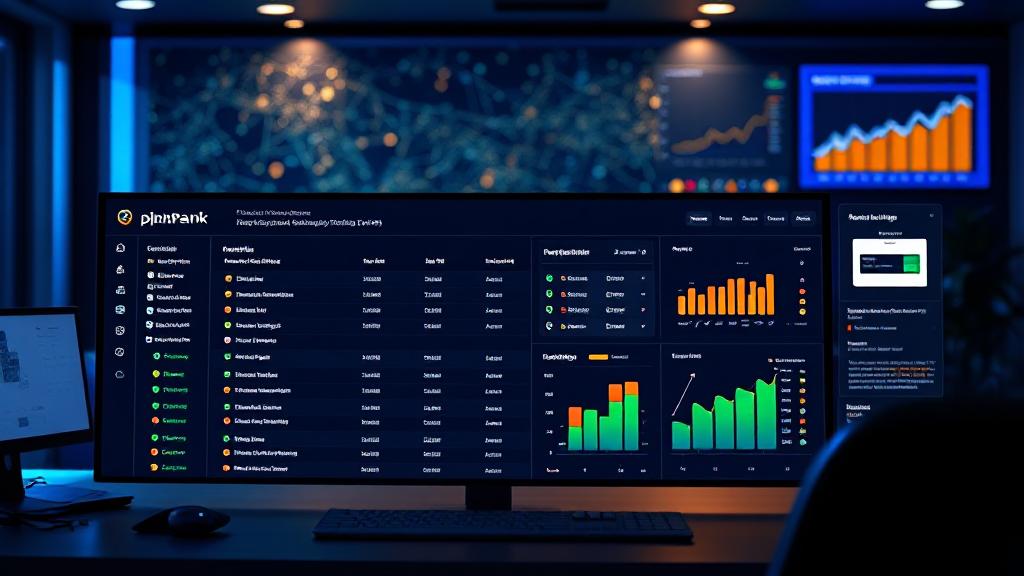
Six weeks. That is how long a link on a mid-tier publisher sat dead before anyone on the account noticed. It had not been removed by an editor; the whole domain had quietly changed hands, and the new owner wiped the archive. The campaign report still showed green. That single blind spot is the reason recovery has to be designed into a link-building operation, not improvised after a client email arrives. pbnrank exists as a control room for exactly this kind of long-running work: orders, content, publishing schedules and verified delivery in one place, so that a vanished link becomes a task instead of a surprise.
Why Backlinks Vanish and Why Nobody Notices
Link loss is rarely a single dramatic event. It is a slow accumulation of small changes that each look harmless in isolation. The danger is not the loss itself but the lag between loss and detection, because that lag is what turns a routine replacement into an awkward client conversation.
The common failure modes
- Publisher churn — a blog stops publishing, expires, or is sold to an owner with different editorial standards.
- Content pruning — an editor consolidates old posts and redirects or deletes the page that carried your link.
- Quiet nofollow edits — the URL still resolves, but the link attribute changes and the value evaporates.
- Domain migration — a site moves to a new structure and old paths break without redirects.
- Manual cleanups — a publisher removes outbound links in bulk after a policy change or a spam audit.
Each of these produces the same symptom: a URL that used to work now returns an error, a redirect to an unrelated page, or a page with no link at all. If your monitoring only checks that the domain is alive, you will miss most of them.
Detection gaps inside normal workflows
Most teams verify a link once, at delivery, and then treat it as permanent. That assumption is the root cause of the six-week blind spot. Campaigns that run for a year or more need a recurring verification step, and that step has to live inside the same system that tracks orders and publishing, otherwise it competes for attention with everything else and loses.
Building a Recovery Workflow Before You Need It
Recovery works best when it is a defined process with owners, triggers and a paper trail. The goal is to make every lost link a known item with a status, not a mystery discovered during a quarterly review.
Step 1: Establish a verification baseline
Record the exact target URL, anchor text, link attribute and the date of first confirmation for every placement. This baseline is what makes later comparison possible. Without it, you cannot tell whether a link was removed, moved or altered.
Step 2: Schedule recurring checks
Run verification on a fixed cadence that matches campaign length: weekly for active campaigns, monthly for mature ones. A pbnrank publishing calendar is useful here because scheduled checks sit alongside scheduled content, so verification is part of the operating rhythm rather than a separate chore.
Step 3: Triage by impact, not by emotion
Not every lost link deserves the same response. Sort losses into three buckets: high-value links on strong pages, mid-tier links worth replacing, and low-value links that can be dropped and documented. This prevents the team from spending a week chasing a link that was never going to move rankings.
Step 4: Replace, recover or retire
- Contact the publisher and ask for restoration if the page still exists.
- If the page is gone, request placement on a relevant live page.
- If the publisher is unresponsive, rebuild the link on a comparable domain.
- If no comparable option exists, retire the link and note the reason in the campaign record.
Every outcome should be logged. The log is what lets you show a client that a loss was handled, not ignored.
Resilience Tactics That Reduce Future Losses
Recovery is the fallback; resilience is the strategy. The more resilient the campaign design, the less recovery work you will do later.
Diversify placement types
Concentrating links on a handful of publishers creates a single point of failure. Spreading placements across different site types, content formats and publishing schedules means no single publisher change can wipe out a meaningful share of the profile.
Prefer placements with editorial stability
Sites with consistent publishing history, clear ownership and stable URLs are less likely to prune content. This is a judgment call, but it is one worth making explicitly during prospecting rather than discovering during recovery.
Keep content and links in the same system
When content generation, scheduling and delivery reporting live in separate tools, the link between a published article and its verification status gets lost. A unified workflow keeps the article, the placement and the check history together, which is what makes fast triage possible.
Document replacements as part of delivery
Clients accept link loss far better when they see replacements handled proactively. Including a short recovery summary in the regular report turns a potential complaint into evidence of operational care.
Resilience Checklist for Long-Running Accounts
Use this checklist as a periodic audit. It is deliberately short so it actually gets used.
| Check | What good looks like |
|---|---|
| Baseline records | Every link has URL, anchor, attribute and first-confirmed date |
| Verification cadence | Weekly for active, monthly for mature campaigns |
| Triage rules | Written criteria for high, mid and low-value losses |
| Replacement policy | Defined thresholds for restore, rebuild or retire |
| Reporting | Recovery actions summarized in client reports |
| Ownership | One named person accountable for verification |
The checklist is only useful if it is reviewed on a schedule. An unreviewed checklist is just documentation of good intentions.
Common Mistakes and Questions Teams Ask
Most recovery failures come from a small set of recurring mistakes. Avoiding them is cheaper than fixing them.
Mistake: verifying only at delivery
A one-time check confirms the link existed, not that it still exists. Treat verification as a recurring task with a calendar entry.
Mistake: replacing without recording
A replacement that is not logged looks identical to a loss that was ignored. The record is part of the work.
Mistake: overreacting to low-value losses
Chasing every lost link equally is a fast route to burnout and wasted budget. Triage first, act second.
Frequently asked questions
How quickly should a lost link be replaced?
High-value links should be triaged within a week and replaced or restored within a month. Mid-tier links can follow the normal publishing cycle. The key is that every loss has a status and an owner.
Can a link disappear without the page changing?
Yes. The URL can resolve normally while the link attribute changes to nofollow or the anchor text is edited. This is why verification should check the link itself, not just the page status.
What should a client report include about link loss?
A short summary of losses detected, actions taken, replacements delivered and any links retired with reasons. This turns recovery into visible operational value rather than a hidden cost.
Is it worth rebuilding a link on a different domain?
Only when the replacement is comparable in relevance and strength. A weak replacement adds work without adding value, so the retire option is often the more honest choice.
Links will always disappear. What separates a resilient campaign from a fragile one is whether the disappearance is caught early, triaged calmly and resolved with a record. Build that into the workflow, and the six-week blind spot becomes a six-day routine.
Leave a Reply